Resilient Microservices in the Void
How I keep distributed systems available under asymmetric latency and partial dependency failure.
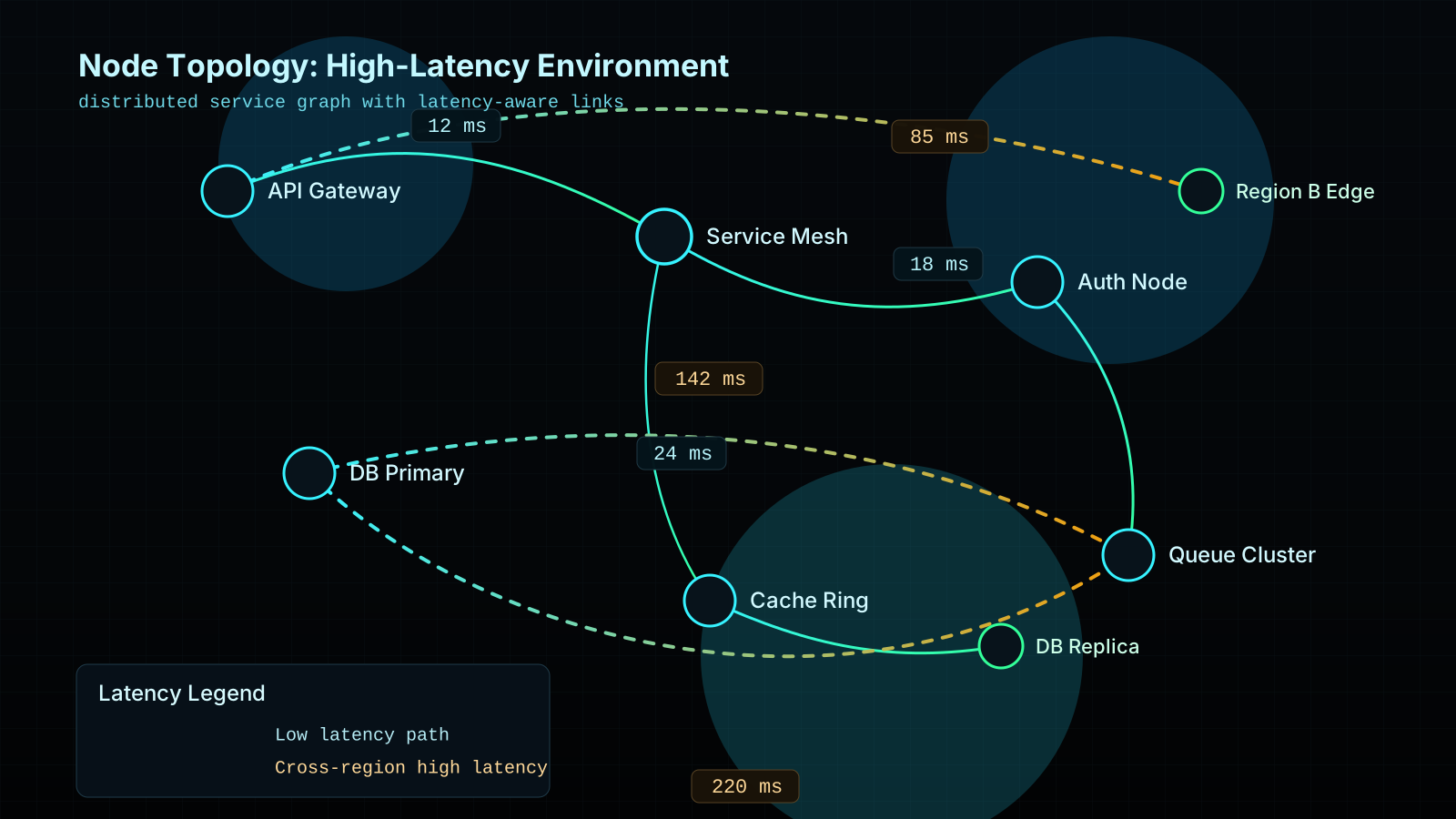
When I design distributed systems, I start with one assumption: the network will fail at the worst possible moment. In microservice environments, pretending calls are reliable is how small hiccups become cascading outages. I design for turbulence first, convenience second.
The Fallacy of Reliable Networks
When service A calls service B, several distinct failures can occur. The DNS resolution might fail. The connection might timeout. The request might be dropped. The response might be delayed beyond acceptable thresholds. Traditional monolithic retries amplify these issues, creating systemic resource exhaustion.
unfold_more content_copy
import time
from enum import Enum


class State(str, Enum):
    CLOSED = "closed"
    OPEN = "open"
    HALF_OPEN = "half_open"


class CircuitOpenError(RuntimeError):
    pass


class CircuitBreaker:
    def __init__(self, failure_threshold: int = 5, reset_timeout: float = 30.0) -> None:
        self.failure_threshold = failure_threshold
        self.reset_timeout = reset_timeout
        self.state = State.CLOSED
        self.failures = 0
        self.last_failure_ts = 0.0

    def execute(self, fn, *args, **kwargs):
        now = time.monotonic()

        if self.state == State.OPEN:
            if (now - self.last_failure_ts) >= self.reset_timeout:
                self.state = State.HALF_OPEN
            else:
                raise CircuitOpenError("circuit is open")

        try:
            result = fn(*args, **kwargs)
        except Exception:
            self.failures += 1
            self.last_failure_ts = now
            if self.failures >= self.failure_threshold:
                self.state = State.OPEN
            raise

        self.failures = 0
        self.state = State.CLOSED
        return result
Implementing the Circuit Breaker
I use the circuit breaker pattern as a hard safety boundary. Instead of repeatedly attempting calls that are already failing, I fail fast, preserve compute headroom, and give downstream systems room to recover.
In practice, a breaker should be stateful, explicit, and observable. Treating it as a simple error counter is not enough in distributed environments where failure modes vary between transport latency, DNS instability, dependency saturation, and partial packet loss. The breaker state must be promoted to a first-class runtime signal that other components can react to in real time.
The transition model is typically closed -> open -> half-open -> closed. Closed allows normal traffic. Open rejects calls immediately once the failure threshold is exceeded. Half-open permits a controlled probe window to evaluate whether the dependency has stabilized. If probes succeed, traffic resumes. If probes fail, the breaker returns to open and the recovery timer resets.
Timeouts, Retries, and Budgets
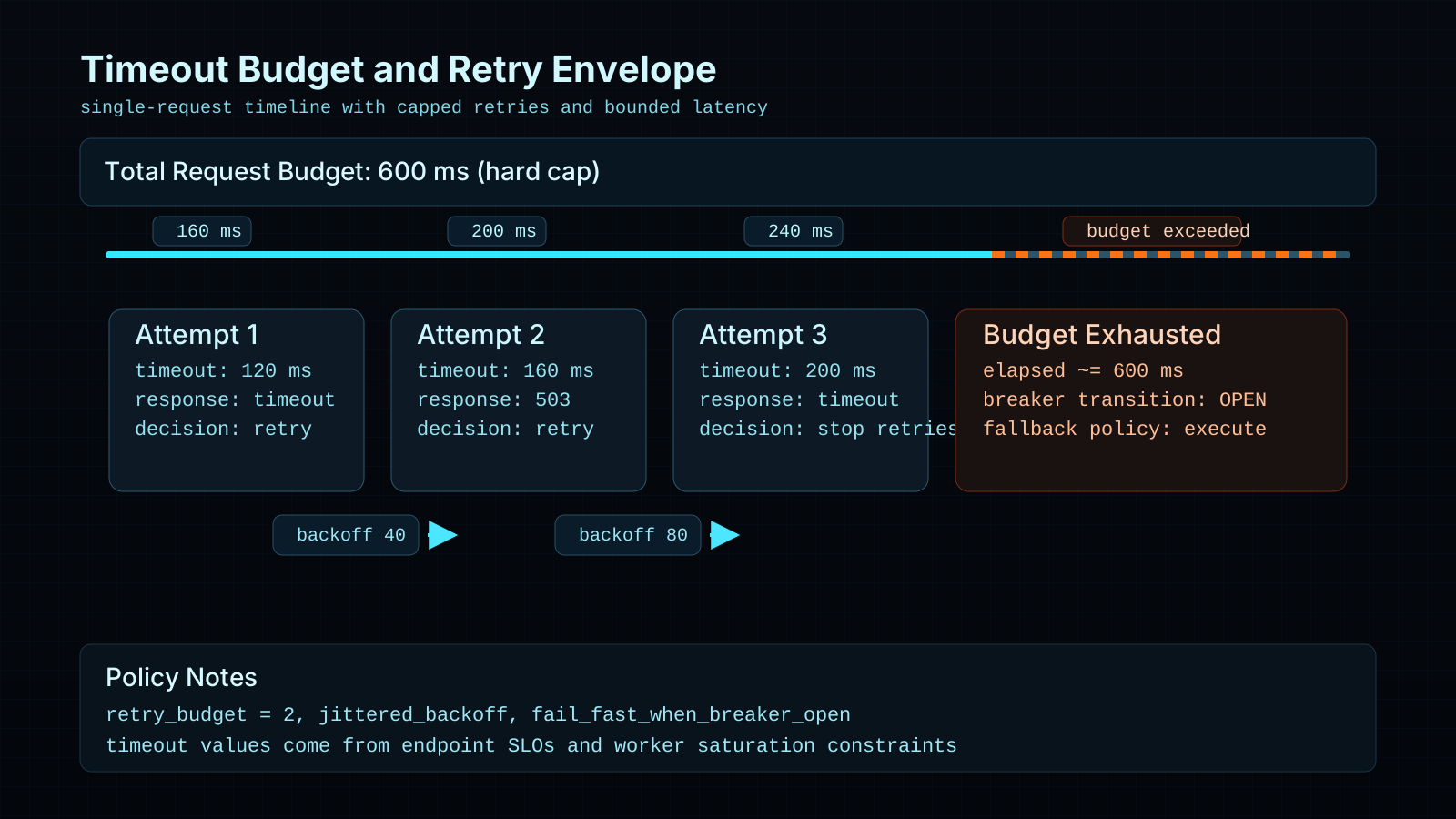
Circuit breakers only work when paired with strict timeout discipline. Without timeouts, calls can hang indefinitely and consume worker capacity until the local service fails under self-inflicted load. Keep request deadlines short and intentional, with upper bounds derived from SLO targets instead of default library values.
Retry behavior must also be budgeted. Unlimited retries behind a breaker can create retry storms that hide true system health and amplify tail latency. Define a retry budget per request path, apply jittered backoff, and terminate retries when the breaker is open unless an explicit fallback path exists.
Fallback Topologies
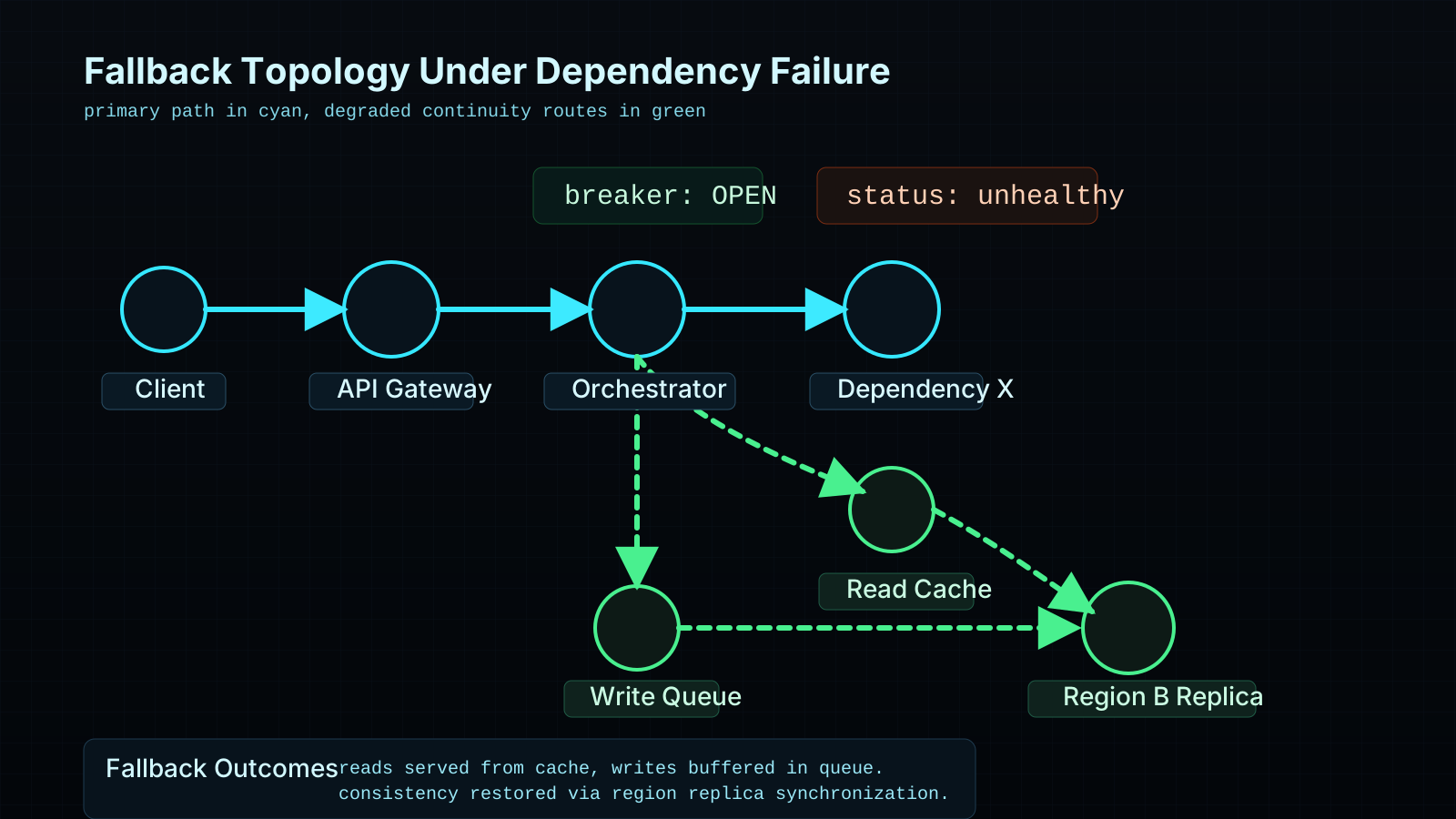
An open breaker should not always mean user-visible failure. Where possible, route to degraded but safe modes: cached reads, stale-while-revalidate responses, asynchronous queue writes, or regional failover read replicas. The key is to preserve core user outcomes while preventing dependency collapse.
Fallback design should be domain-aware. Financial write paths may prefer queued durability over immediate consistency, while identity paths may require strict denial in exchange for security guarantees. Define these rules explicitly per endpoint so operators are not making policy choices during incidents.
Observability and Operational Tuning
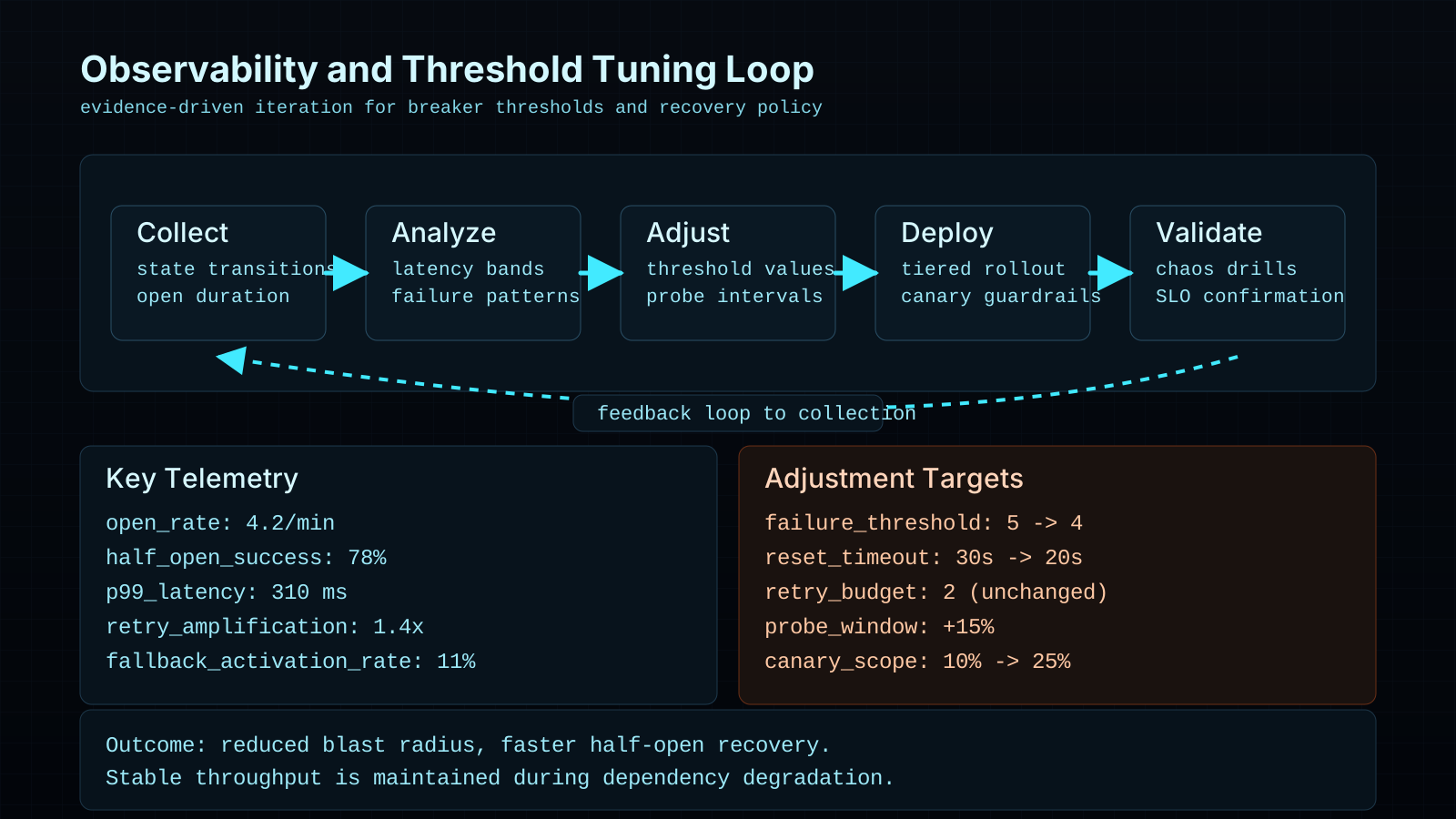
Breakers are operational controls, so they must emit high-quality telemetry: state transitions, open durations, probe success rates, and per-dependency failure distributions. Correlate breaker events with latency histograms and saturation metrics to distinguish true downstream degradation from local resource bottlenecks.
Tune thresholds from production evidence, not intuition. Start conservative, run failure injection drills, and iterate thresholds by service tier and criticality. The objective is not to avoid all errors; it is to contain blast radius, protect throughput, and recover predictably under stress.
Conclusions
The biggest shift for me is treating resilience as runtime policy, not just architecture theory. Circuit breakers, strict timeout budgets, and explicit fallback routes give me a way to keep user-critical paths alive even when dependencies are unstable.
If I am continuing this work, I focus next on failure-injection cadence, service-tier-specific breaker thresholds, and cleaner dependency contracts between teams. That combination gives me smoother incident behavior and fewer surprises when the network gets hostile.
Initialize Thread
Excellent breakdown on the execution state. How do you handle half-open states in a highly distributed mesh where state jitter might trigger premature closures?
Great question. I usually implement a distributed consensus store for the breaker state to minimize jitter, though it adds a slight latency overhead. The trade-off is stability over speed during failure states.