Neurodivergent Advantage in M&A
How I triage an acquired technology estate across systems, networks, business applications, SaaS, and cloud foundations.
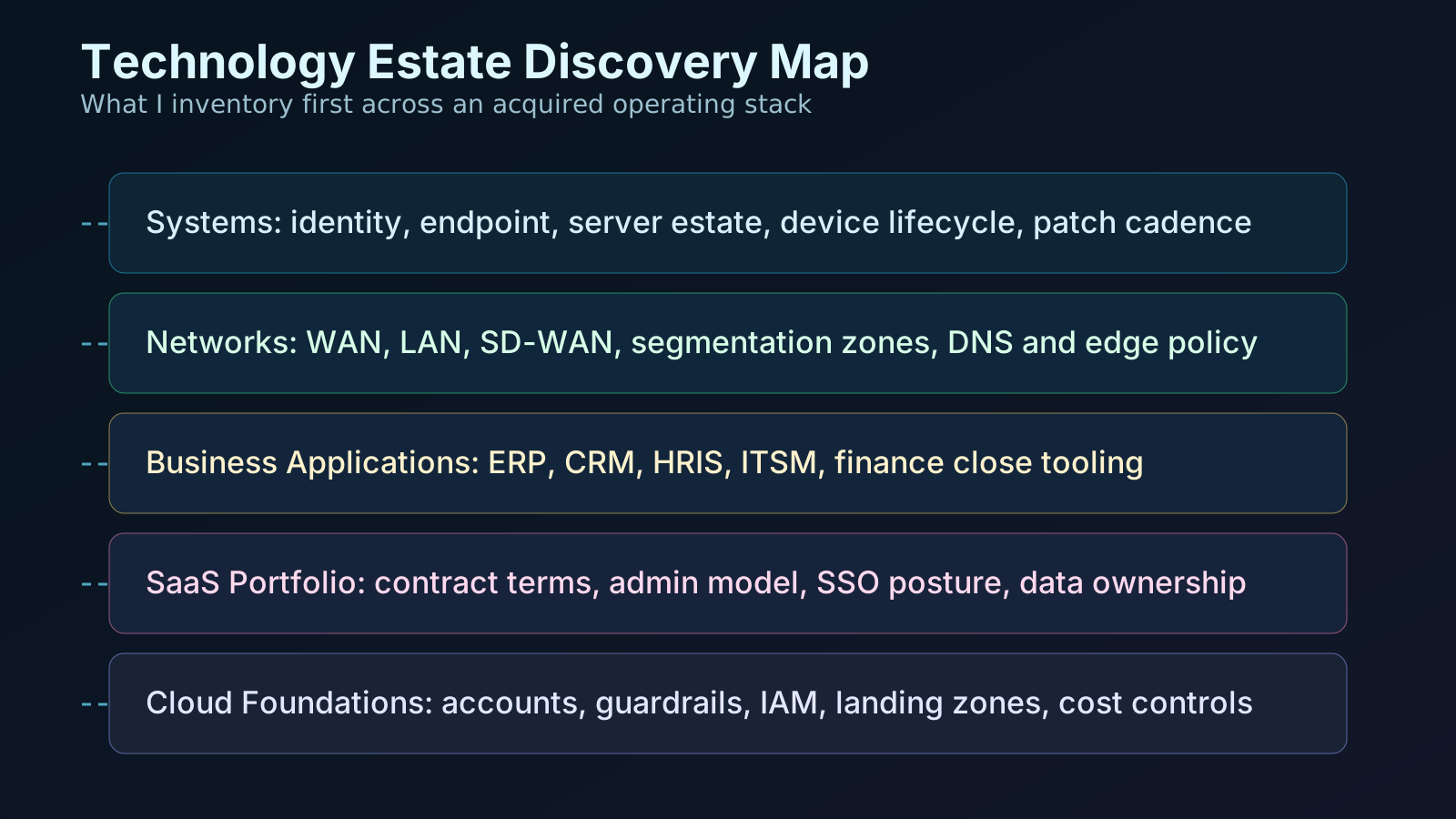
When I lead discovery for an acquisition, I am not evaluating code quality first. I am evaluating the operating estate the acquired company depends on every day: systems, networks, business applications, SaaS contracts, and cloud foundations. That is where integration risk usually hides.
What I Optimize for in Discovery
My goal is to reduce decision lag. I want a fast and defensible answer for each category: keep it as-is, keep it with modifications, or rip-and-replace with the purchaser standard. I treat that triage as the backbone of integration planning.
Discovery Pass: What I Inventory First
In the first pass, I map capabilities, owners, contracts, and operational dependencies. I am looking for practical fit, not theoretical elegance. If a platform cannot meet purchaser controls for identity, resilience, or governance, it is already on a watchlist.
- Systems: endpoint management, identity lifecycle, patch posture, supportability.
- Networks: segmentation model, edge policy, DNS, remote access, WAN design.
- Business applications: ERP, CRM, finance tooling, HR platforms, ITSM processes.
- SaaS: contract terms, admin model, SSO maturity, data residency, offboarding clauses.
- Clouds: account structures, IAM boundaries, landing zones, guardrails, cost controls.
Triage Matrix for Fit Decisions
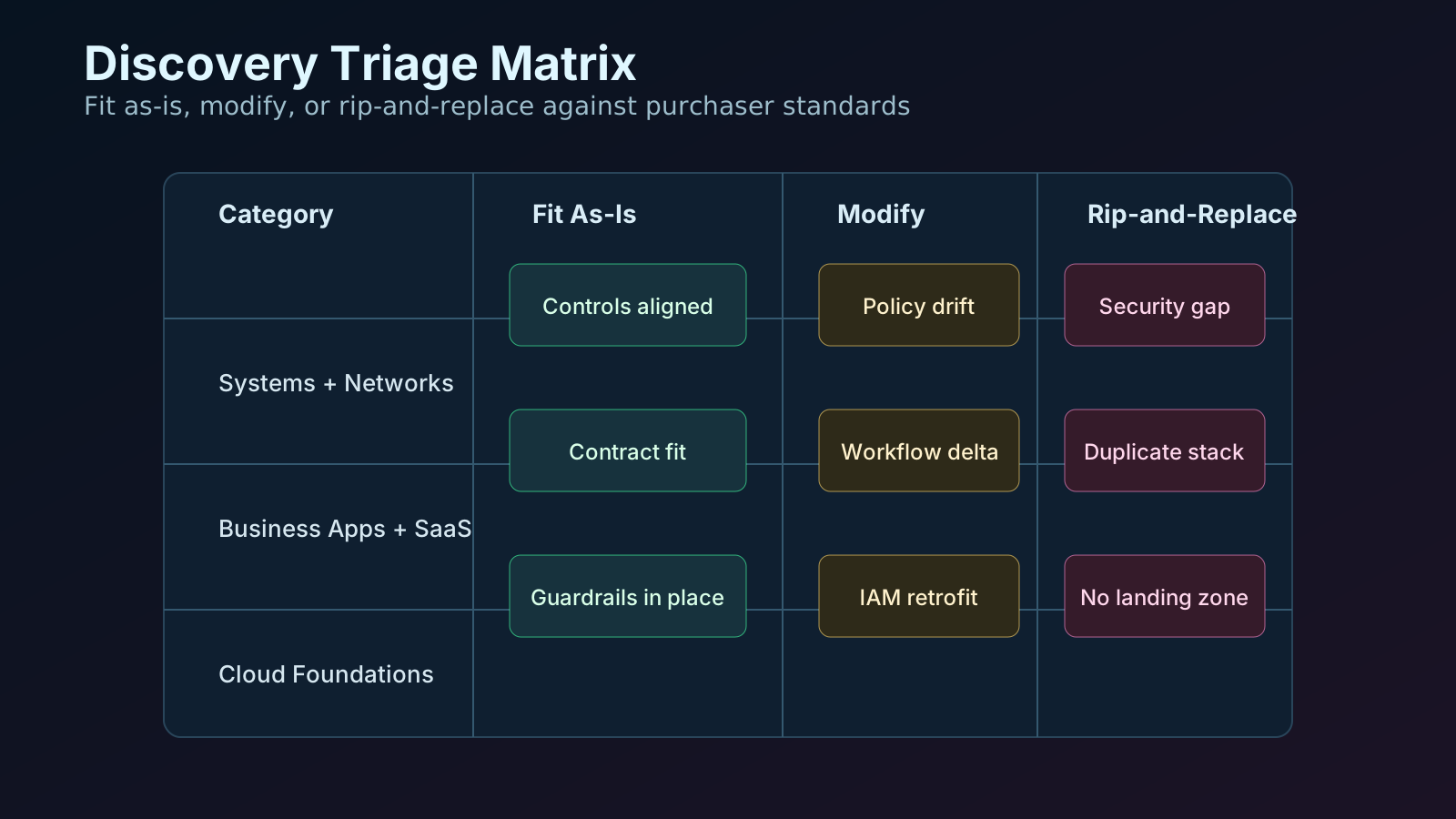
I score each category on control alignment, operational risk, and migration friction. Then I force a decision path:
- Fit as-is: keep the acquired platform with minimal disruption.
- Fit with modifications: remediate gaps while preserving core tooling.
- Rip-and-replace: sunset the acquired stack and move to purchaser standards.
I do not leave this as an abstract recommendation. I assign an owner, a timeline, and a dependency map for every decision.
Category-by-Category Decision Rules
Systems
I keep systems as-is only when endpoint controls, identity lifecycle, and vulnerability response already match purchaser policy. I move to modify when controls are close but operationally inconsistent. I rip-and-replace when identity boundaries or supportability introduce unacceptable risk.
Networks
I keep network design as-is when segmentation, DNS posture, and edge policy align with purchaser security requirements. I modify when topology is viable but needs policy refit. I rip-and-replace when network trust boundaries are fundamentally incompatible.
Business Applications
For business applications, I make decisions based on process fit and data model portability. I keep as-is when operational workflows are already compatible. I modify when process gaps are narrow. I rip-and-replace when the application blocks standard finance, HR, or service operations.
SaaS Portfolio
I keep SaaS tools as-is when contract terms, admin controls, and data ownership clauses are acceptable. I modify when the platform is useful but commercial or security posture needs adjustment. I rip-and-replace when there is duplicate capability and the purchaser standard is already mature.
Cloud Foundations
I keep cloud foundations as-is only when guardrails, IAM boundaries, and account models already align with purchaser standards. I modify when the structure is recoverable within the integration timeline. I rip-and-replace when there is no trustworthy landing-zone baseline.
Planning Sequence After Triage
After triage, I convert each decision into a planning lane with scope, budget, owner, and risk checkpoint. That prevents integration from drifting into endless analysis.
- Weeks 1-2: discovery inventory and purchaser-standard mapping.
- Weeks 3-5: triage decisions for systems, networks, apps, SaaS, and cloud.
- Weeks 6-10: modification and migration pilots for high-risk categories.
- Weeks 11-14: cutover planning, rollback rehearsal, and control sign-off.
My objective is simple: remove ambiguity early, align to purchaser standards deliberately, and avoid carrying inherited operating risk into day-one integration.
Conclusions
What this model gives me is a cleaner path from discovery to action. By forcing an as-is, modify, or rip-and-replace decision across systems, networks, business applications, SaaS, and cloud foundations, I avoid the slow drift that turns integration into prolonged uncertainty.
My next step after this stage is to keep tightening execution fidelity: verify ownership accountability, pressure-test cutoff and rollback plans, and keep risk checkpoints visible through day-one and beyond. That is how I turn triage decisions into stable operating outcomes instead of slideware.
Initialize Thread
I like the triage framing. In my last acquisition, network policy looked compatible at first, but the DNS control model broke identity rollouts until I forced a modify decision.
That is exactly why I force category-level fit calls early. If DNS, IAM, or contract ownership is ambiguous, I treat it as modify or replace immediately instead of deferring the decision.