Database Sharding Kinetics
How I evaluate high-velocity partition strategies without losing operational control.
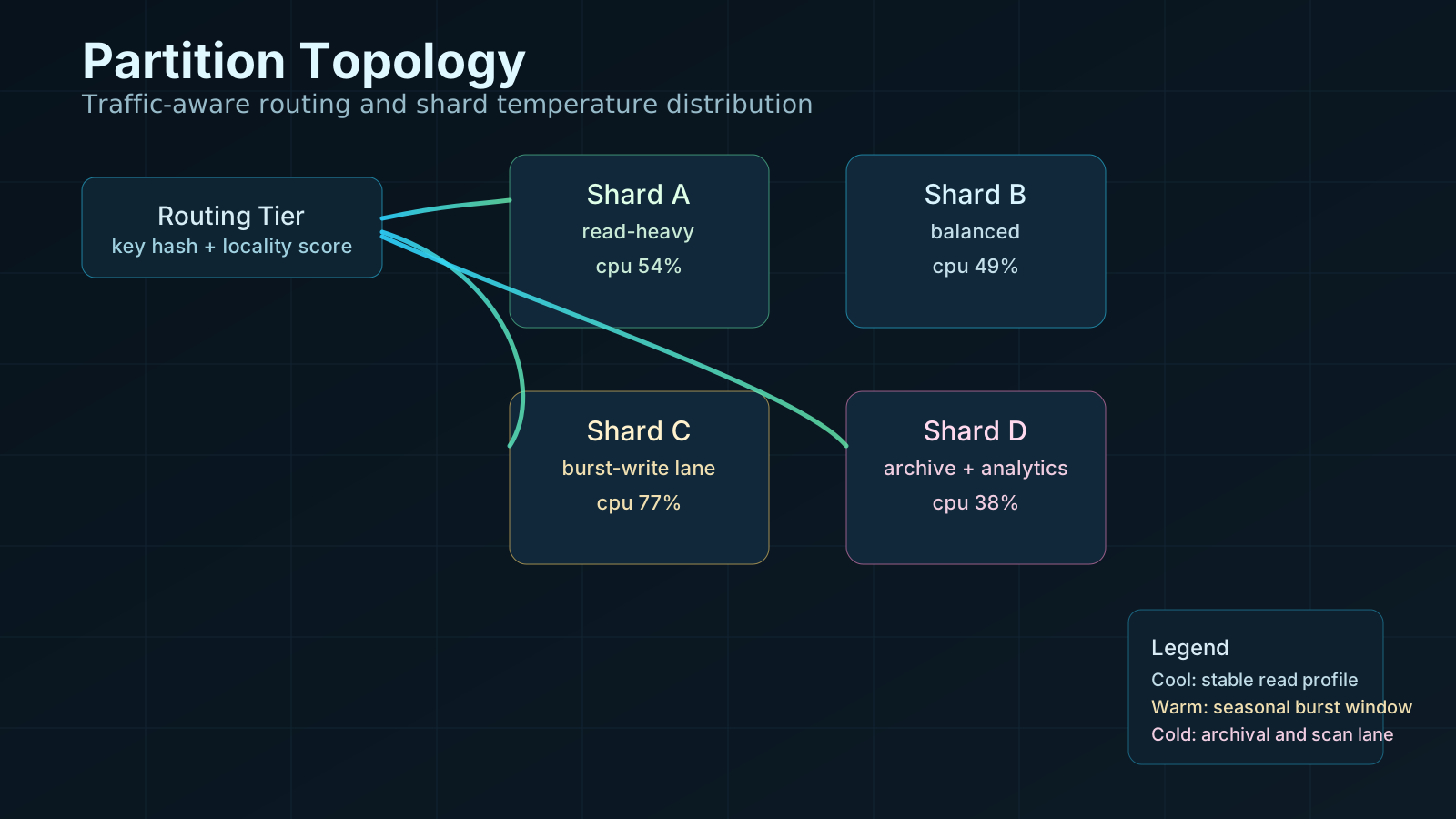
When I move a platform from a monolith to sharded storage, the hard part is not partitioning data. The hard part is aligning routing policy, migration controls, and observability so they evolve together. Without that alignment, complexity grows faster than throughput.
The Friction of Partitioning
As soon as I split data across physical boundaries, routing semantics become the real performance boundary. In one of my field analyses, naive key distribution raised cross-partition latency by roughly 40% versus locality-aware partitioning tuned to actual workload shape.
Shard Key Selection Under Real Traffic
I start shard-key design from production access patterns, not abstract entity diagrams. I look at write skew, read locality, and cross-tenant query behavior before I commit to a strategy. If I skip that step, I usually pay for it later through expensive rebalancing.
The strongest strategies I have deployed combine deterministic distribution with domain boundaries such as regional affinity or tenant tiering. That keeps routing predictable while reducing hot shards during burst windows.
unfold_more content_copy
from dataclasses import dataclass


@dataclass
class ShardLoad:
    shard_id: str
    cpu: float
    p99_ms: float
    keyspace_pct: float


def eligible_for_rebalance(load: ShardLoad) -> bool:
    cpu_hot = load.cpu >= 0.80
    latency_hot = load.p99_ms >= 120.0
    oversized = load.keyspace_pct >= 0.33
    return cpu_hot or latency_hot or oversized
Rebalancing as an Operational Product
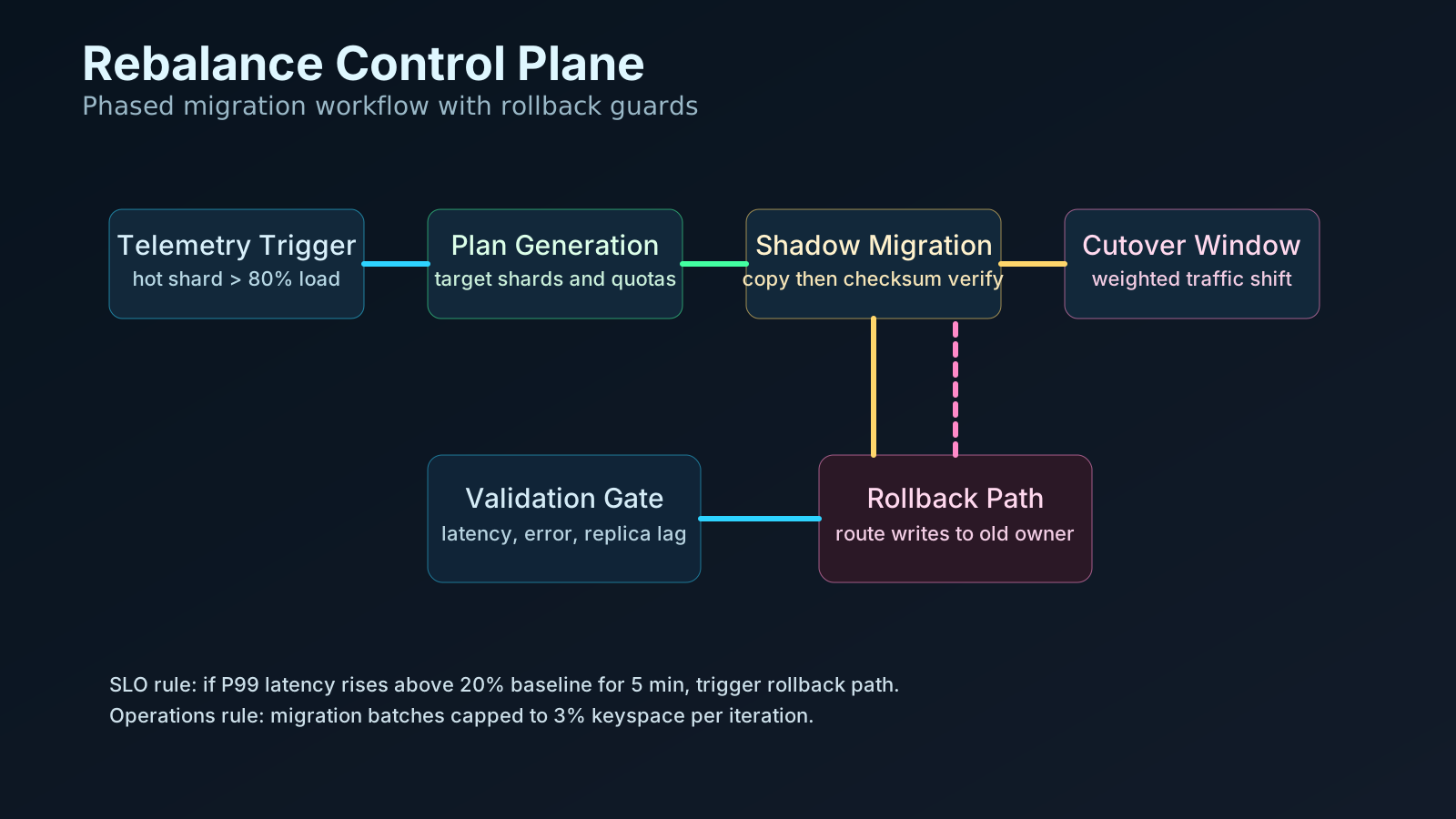
I treat rebalancing as a repeatable operational product: trigger detection, plan generation, shadow migration, staged cutover, and automated rollback conditions. Ad hoc scripts might work once, but they collapse quickly under sustained growth.
I set explicit safety limits for every migration cycle: maximum keyspace moved per batch, latency and error guardrails, and checksum verification before ownership transfer. Those controls reduce blast radius and keep operations auditable.
Performance Benchmarks: Node Stress
The important point is not the absolute number by itself. I judge benchmark quality by workload realism, SLO alignment, and how much recovery headroom the system keeps when traffic spikes.
Consistency and Query Routing Policy
I do not force every workload into the same consistency model. I route transactional writes to strict-consistency lanes, while analytics and feed-generation paths run on bounded staleness. Defining those lanes early prevents expensive debates during incidents.
I expect query routers to carry policy context, not just key lookup logic. If a request is read-critical and region-local, I route it accordingly. If it is backfill traffic, I de-prioritize it away from hot shards.
Observability, Cost, and Failure Drills
I rely on telemetry that maps directly to shard-health decisions: shard temperature, rebalance queue depth, replica lag, and cross-shard query ratios. Without those signals, I cannot reliably tell transient burst pressure from structural partition misalignment.
I also run failure drills on rebalance workflows. I test rollback under load, simulate stale routing metadata, and verify that alerting catches each failure mode.
My end goal is predictable kinetic flow instead of accidental bottlenecks. Every sharding decision I make is a tradeoff among throughput, consistency guarantees, and operational complexity.
Conclusions
Sharding pays off for me when it is operated as a discipline, not treated as a one-time migration. The strongest results come from pairing key design with routing policy, rebalance safeguards, and telemetry that can explain why latency shifts before it becomes an outage.
From here, I usually continue with recurring workload revalidation, periodic failure drills on rebalance paths, and SLO-driven policy tuning as traffic evolves. That keeps partition strategy aligned to real demand instead of freezing assumptions from day one.
Initialize Thread
The observation on range vs hash sharding is valid, but how are you handling the rebalancing logic when a specific range node reaches capacity thresholds?
I utilize a pre-split strategy combined with background kinetic rebalancing. When a shard hits 80% capacity, I begin directing new writes to a pre-warmed sibling node while migrating historical data during low-velocity periods.